META ADS
Meta Adsthat turn creative into demand
Facebook and Instagram are not search engines. Most people who see your ad were not actively looking for you, which means performance depends on earning attention, communicating the offer clearly and building enough trust for the next step. Meta has changed significantly in recent years — targeting now relies far more on giving the algorithm strong creative and clean conversion signals than on manually built interest stacks. We use Meta as part of a wider funnel, with a disciplined creative testing system, sensible campaign structure, reliable tracking through both the pixel and server-side data, and clear measurement at the centre, so results are judged on real leads and sales rather than likes, clicks or vanity metrics.
What makes Meta
advertising work
Results tend to come from creative variety and audience feedback more than platform settings alone. Modern Meta accounts perform best with simpler structures — broad delivery paired with strong creative, clear event optimisation, and a steady stream of new ad variations to keep the algorithm learning and prevent fatigue. The work is in feeding the platform good signals and giving it enough material to find the right people, not in over-engineering the targeting.
Creative does the heavy lifting
On Meta, the ad itself has become the main targeting tool. With broad audiences and Advantage+ delivery, the algorithm uses the image, video, copy and engagement signals to work out who each ad should be shown to. That means creative quality, variety and volume matter more than audience settings. We produce and test a steady stream of concepts, formats and hooks, including video, static, carousel and user-generated style content, so the platform always has fresh material to learn from.
The offer needs to be easy to understand
People on Facebook and Instagram are scrolling, not searching. You have a second or two to stop the scroll and make it obvious what you offer, who it's for and why it's worth acting on. Clear, specific offers such as a free consultation, a limited-time promotion or a compelling product benefit consistently outperform vague brand messaging. We work on the offer and the angle before we work on the ad.
Broad targeting can be powerful
Detailed interest targeting is far less important than it used to be. In many accounts, broad targeting with strong creative and accurate conversion data now outperforms narrow audiences, because it lets Meta find buyers you wouldn't have thought to target. We still use location, age and exclusions where they make sense, and test custom and lookalike audiences, but we let data rather than assumptions decide.
Retargeting supports the decision
Most people won't buy or enquire the first time they see you. Retargeting reaches website visitors, video viewers, Instagram and Facebook engagers and past customers with messaging that answers objections, shows proof such as reviews and case studies, and gives a reason to act now. It is usually a smaller share of budget, but it often produces some of the most efficient results.
Lead quality matters more than platform volume
Meta can generate a lot of leads cheaply, especially with instant forms, but volume is meaningless if the leads never answer the phone. We use qualifying questions, higher-intent form settings and landing pages where appropriate, and feed real outcomes back to Meta through the Conversions API and CRM integrations so it optimises for people who become customers.
Case study
Insulation Company of 40+ Years
How a long-established insulation business halved its cost per lead, cut monthly ad spend and grew organic traffic fivefold in two months.

Case study
Water Filtration Company
How a water filtration company generated 53 enquiries worth $145,500 in lead value within 14 days of relaunching its Meta and Google Ads.

Case study
National Door Repair Company
How a national sliding door repair company broke into the Brisbane market, going from a handful of first-page keywords to 16 first-page rankings in just two months.

The four pillars of what we do
Digital
marketing strategy
Every channel should have a reason to exist. We build the strategy around your commercial goals first, then decide where SEO, advertising, content, creative and website improvements fit together.
Digital
Advertising
We plan, build and optimise paid campaigns across the platforms that make sense for your business, with the freedom to shift focus as performance and opportunities change.
Search engine
optimisation
SEO is treated as part of the wider marketing system, not a separate monthly checklist. We focus on site structure, search intent, useful content, local visibility and the work most likely to improve rankings and enquiries.
Marketing
audits
Sometimes the fastest way forward is to understand what is already happening. Our audits pull apart your marketing, tracking, website and campaigns so you can see what is working, what is wasting budget and what should happen next.
Next level
performance

Heat mapping
We use heat mapping and session recordings to see exactly how real visitors move through your most important pages, where they click, how far they scroll, and where attention drops off before they take action. That behavioural evidence replaces guesswork with a clear picture of what's actually happening on the page, not just what the numbers suggest might be happening. It's one of the fastest ways to spot friction on a landing page or website before it shows up as a drop in enquiries.

Creative testing
Ad creative, messaging and offers are tested systematically rather than swapped on instinct, so we can see which combinations of images, headlines and calls to action genuinely move the numbers. Every test runs against a clear hypothesis with enough data behind it to draw a real conclusion, not just a feeling about what 'looks better'. Over time this builds a picture of what actually resonates with your audience, so advertising keeps improving through evidence rather than personal preference.

12-month roadmaps
Every account gets a structured plan covering the next 12 months, so effort stays focused on the highest-impact work instead of whatever feels most urgent that week. That roadmap keeps the bigger picture clear and shows how individual campaigns and channels fit into the wider strategy. It's a living plan rather than a fixed one, though, as priorities shift the moment the data points to a better opportunity.
Reporting & analytics
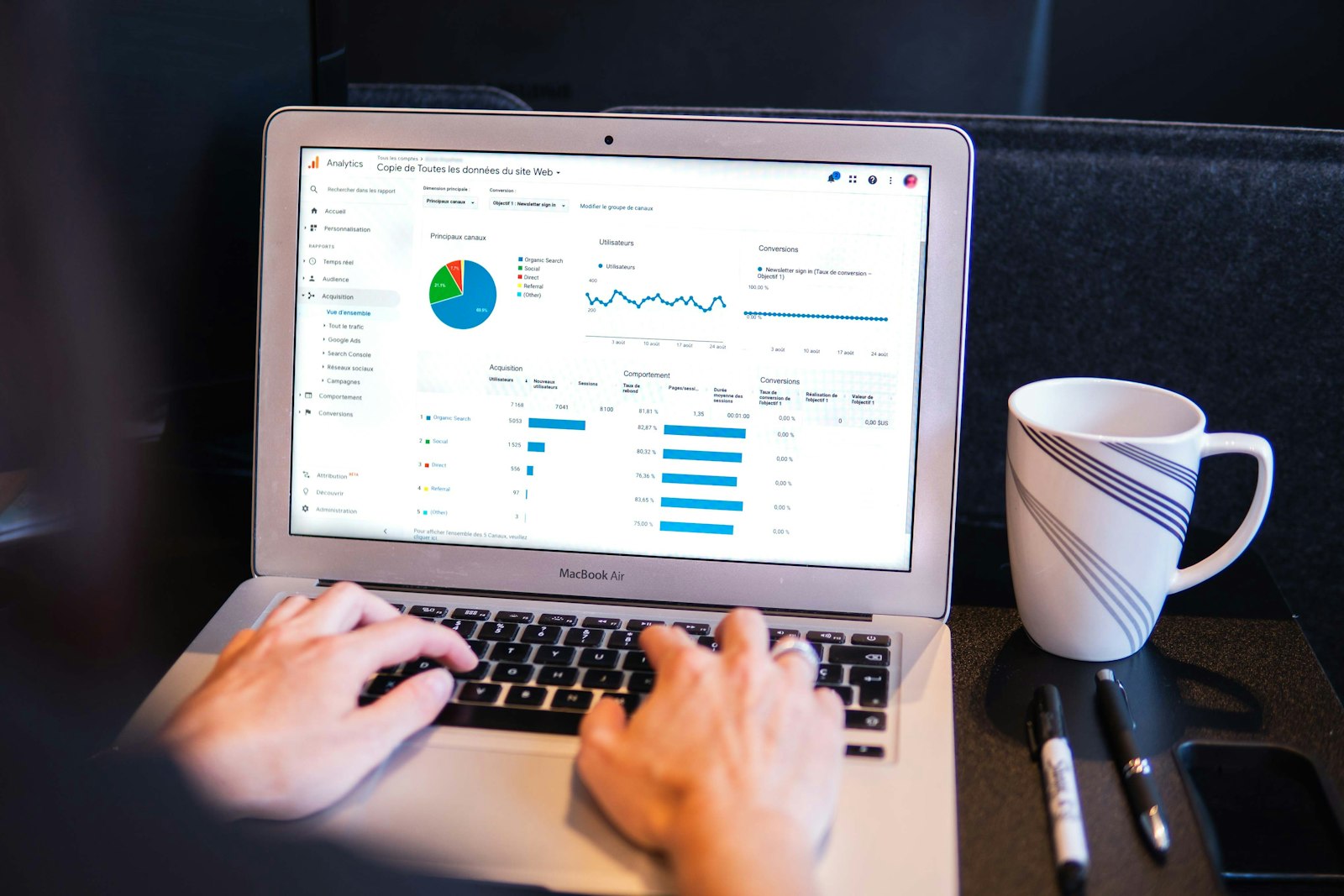
Reporting is built around the numbers that actually matter to your business, leads, sales, cost per acquisition and revenue, rather than vanity metrics like impressions or clicks that look good but don't pay the bills. Performance across every channel is brought together in one place, so you can see the full picture of what's working and what isn't without having to piece it together yourself. Regular, honest reporting means decisions are always based on what the data is actually showing.

Strategy sessions
We regularly step outside the day-to-day execution to properly review performance, challenge our own assumptions and decide what genuinely deserves attention next. These sessions are where the bigger strategic questions get asked, whether a channel is still the right investment, whether the market has shifted, what should be tested next, rather than just fine-tuning what's already running. It keeps the account moving forward with intent instead of drifting on autopilot.

Dedicated account management
You work directly with people who know your business and understand the history behind your account and the decisions that led to where things stand today, rather than being passed between different points of contact. That continuity means less time re-explaining context and more time acting on it. Your account manager connects the dots across every channel we run, so strategy stays joined up instead of siloed.
Reviews
Real feedback from the businesses we work with, straight from Google.
Ethan has done a fantastic job with the SEO on our website. He took the time to properly work through the site, improve the structure, optimise the important pages and explain what he was doing along the way. Since the work commenced, I’ve already seen some very encouraging improvements in our Google visibility and rankings.

I’ve had an amazing experience working with Ethan. From day one, it’s been obvious that he genuinely cares about helping my business grow and always has my best interests at the centre of every recommendation he makes. His service is incredibly personalised, and his expertise across all areas of digital marketing is outstanding.
Ethan has been fantastic to work with. He’s currently helping us with our marketing, SEO and website landing pages, and the level of effort and knowledge he brings has been outstanding. Highly recommend Ethan and The Digital Marketing Consultants to any business looking for someone knowledgeable, reliable and committed to helping your business grow.
I have always been impressed with Ethan’s analysis and enthusiasm and thoroughness in his work for us. He has definitely made a big difference to our presence.
Where Meta performance is
won or lost
Message-market fit and tracking quality tend to explain more than any single campaign setting. If the signals feeding the algorithm are unreliable, performance becomes hard to trust and hard to improve — which is why a stable pixel and server-side tracking setup matters as much as the creative itself. When results look good in-platform but don't translate into real enquiries or sales, the fix is usually in what's being measured, not the bid strategy.
Creative volume and variety
Creative fatigue is one of the most common reasons Meta performance declines. When the same few ads run for too long, frequency climbs and results drop. Accounts that keep introducing genuinely different concepts, not just new colours on the same ad, give the algorithm more ways to find new buyers and stay efficient for longer.
Message-market fit
The best-performing ads speak directly to a specific problem, desire or objection your customers already have. Testing different angles such as price, speed, quality, trust or outcome reveals which message resonates with which audience, and those learnings are valuable well beyond Meta, including on your website and in other channels.
Tracking and CRM feedback
Since iOS privacy changes, browser-based pixel tracking alone misses a meaningful share of conversions. The Meta Pixel paired with the Conversions API, correct event setup and domain verification gives Meta far better signals. Feeding back which leads became customers helps the algorithm optimise for quality, not just quantity.
The follow-up experience
Meta leads are often earlier in their decision than search leads. How quickly and how well they are followed up makes an enormous difference to conversion. Speed to lead, automated email or SMS sequences and a clear next step often have more impact on return than any campaign setting.

Next level performance starts with a clearer strategy.
Tell us where your marketing is at, what you are trying to achieve and what is getting in the way. We will help you work out the most sensible next step.
Book a strategy callOur process
Discovery call
We start by understanding your business, customers, offers, margins and sales process, and what you need Meta to achieve, whether that's leads, bookings, online sales or awareness. We also look at the creative assets you already have and what has or hasn't worked in the past.
Account and tracking review
We review your Business Manager, ad account, Pixel, Conversions API, event setup and domain verification, then audit past campaigns, creative performance, audiences and results. Tracking gaps are fixed before any new budget is spent, so Meta is optimising on accurate data.
Campaign strategy and build
We plan a simple, scalable account structure, define the offers and creative angles to test and produce the first round of ads across video, static and carousel formats. Campaigns, audiences, placements, lead forms or landing pages and conversion events are set up around your goal.
Launch and optimisation
Once live, we monitor learning, frequency and cost per result, pause weak ads quickly and scale the winners. New creative is introduced on a regular cycle to prevent fatigue, and budgets are shifted between prospecting and retargeting as performance data builds.
Reporting and next steps
Reporting focuses on cost per lead or purchase, return on ad spend, lead quality and which creative angles are working, not just reach and clicks. Each review ends with clear next steps, including the next round of creative tests.
Frequently asked
questions
Is Meta better for awareness or lead generation?
It can do both well. Meta is excellent at building awareness efficiently, but with the right offer, tracking and optimisation event it is also a strong source of leads and online sales. Most accounts combine prospecting to reach new people with retargeting to convert those who have shown interest.
Do Meta ads still work without detailed targeting?
Yes, and often better. Since privacy changes reduced the data available for interest targeting, broad audiences combined with strong creative and accurate conversion tracking frequently outperform narrow targeting. The creative now does much of the targeting work.
What kind of creative works best?
Native-feeling content that stops the scroll: short vertical video, clear benefit-led statics, testimonials, before-and-after, demonstrations and user-generated style content. The best creative depends on your audience, which is why we test several angles and formats rather than guessing.
Do we need new creative all the time?
You need a regular flow of it. Ads fatigue as the same people see them repeatedly, so introducing fresh concepts every few weeks keeps costs stable. That doesn't always mean expensive shoots; new hooks, edits and formats from existing footage often work well.
Do we need the Conversions API (CAPI)?
In most cases, yes. Browser-based pixel tracking now misses a meaningful share of conversions due to ad blockers and privacy settings. CAPI sends events directly from your server or platform, improving both reporting accuracy and Meta's ability to optimise.
Why do my leads look good in Meta but don't turn into customers?
This usually happens when campaigns optimise for cheap form submissions rather than quality. Instant forms make enquiring very easy, which can attract low-intent leads. Adding qualifying questions, using higher-intent forms or landing pages, following up quickly and feeding outcomes back to Meta all help.
How much budget do we need for Meta ads?
It depends on your cost per result and goals. The budget needs to be large enough for Meta to record meaningful conversions each week so it can learn. We'll recommend a starting range based on your industry and offer, then scale based on results.
Do we need a landing page, or can we send traffic to our website?
You can use your website, instant lead forms or a dedicated landing page. Dedicated pages that match the ad's message usually convert better than general website pages, and often produce higher-quality leads than instant forms. We'll recommend the best option for your offer.
How long does it take for Meta ads to work?
You'll see activity within days, but it typically takes four to eight weeks of testing and learning to establish reliable performance. Results tend to improve over time as winning creative is identified and the algorithm gathers data.
Can Meta work for service businesses, not just eCommerce?
Absolutely. Trades, clinics, professional services, real estate, education and hospitality businesses all use Meta successfully for leads and bookings. The key is a clear offer, creative that shows real people and results, and fast follow-up.
Do we need to be on Instagram if we advertise on Meta?
Ads can run on Instagram without an active posting strategy, but having a credible Instagram and Facebook presence helps, as many people check your profile before enquiring. Placements are usually automatic across both platforms.
Is Meta better than Google Ads?
They do different jobs. Google Ads captures people already searching, while Meta creates demand among people who aren't searching yet. Many businesses get the best results using both, with Meta building awareness and Google capturing the searches that follow.
Do we need video ads?
Not exclusively, but video, particularly short vertical video for Reels and Stories, is one of the most effective formats on Meta. A mix of video and static creative usually performs best, and video doesn't need to be highly produced to work.
Latest insights
Practical thinking on digital marketing strategy and channel performance.
Most local businesses are barely using their Google Business Profile. Here's how to optimise it for reviews, rankings, and more customers - starting this week.
The Power Of Good Content To Rank On Google
Lead Generation vs eCommerce Ads on Meta: Structural Differences That Drive Performance in 2026
Understand the structural differences between lead generation and ecommerce campaigns on Meta Ads.
Let's talk about your marketing
Tell us a little about your business, what you are currently doing and where you want to get to. We will come back to you with a clear idea of what the next conversation should focus on.